Featured

FADE IN:

Cinema is a matter of what’s in the frame and what’s out.

— Martin Scorsese

Starting now I’m collecting all my writings on film – essays, episode guides, unproduced scripts, lists – along with expanded posts from my cinemagrids and flawless frame twitter accounts, some old video essays I made, a catalogue of what I’m watching with notes, and whatever else pops into my head right here on this blog. And only 20 years after everyone else. Enjoy.

Essay: Reaching, Holding, Fighting: Hands in ‘Only God Forgives’

originally published June 9, 2017

Of the films that comprise Refn’s Neon Trilogy, Only God Forgives is simultaneously the most narratively straight-forward and also the most obtuse. The events of the film follow a simple enough structure – man commits crime, is killed for it, brother seeks revenge – but everything else is murky, from character origins and true relationships to motivations and even outcome. Only God Forgives is a film about vengeance, virtue, perversion, violence, and duty both moral and familial, but above all else, it is a film about hands.

Throughout its course, Refn interjects dozens of visual references to hands into Only God Forgives, some subtle and some blatant, but by and large they fall into one of three categories of representation: there are hands as weapons or other means of aggression release, then hands as a symbol of futility, and finally hands as a method of connection.

Speaking to the first category, hands as weapons, the most obvious representation here is a fist, especially in regard to Julian, for whom violence or its restraint is the primary characteristic. His hands have dealt his fate: they killed his father a decade before the film’s beginning, the crime that sent Julian in exile to Thailand; they govern his legitimate life as a Muy Thai boxing club promoter; and they also facilitate his underground activity as a drug dealer, a profession personified by shadowy handoffs. As the narrative progresses, his hands and the violence they wreak will seal his fate, as well, a journey that comes to a climax in the fight between he and Chang – that Julian initiates – in which our anti-hero’s hands fail to land even a single blow on his opponent.

Speaking of Chang, his hands too manifest violence, largely when gripped around the hilt of his sword, but when it comes to that climactic fight, we find he’s just as adept with his bare hands, more adept, even, than Julian, whose hands have never known any other use than as a means of destruction, personal or otherwise.

This final fight is also the crescendo moment of the second category I mentioned, hands as a symbol of futility. Julian’s hands are all he has, they are who he is, and they fail him in the end, to the tune it would seem he is relieved of them all together by Chang’s blade in the film’s penultimate scene. We’ve seen signs of this impending failure the entire film, from the very first scene which consists of nothing more than Julian’s hands filling the frame, turning over introspectively, to the scene in which Julian washes them in a sink whose water turns to blood in his mind, to the way he makes fists of them then opens them again and finally balls them once more before initiating an abrupt beatdown in Mai’s club. This last instance in particular reflects Julian’s inability to defy his nature, both as a violent person and a dutiful one, it shows how he has no other recourse but violence, it represents his lack of control over his life and his role as a faithless disciple of brutality. So then not only do his hands physically fail him, casting his ultimate purpose as a futile one, they fail him spiritually as well by failing to deliver him the vengeance he seeks and thus the release he hopes to attain from this way of life.

Lastly, Refn uses hands to punctuate moments of connection between characters, specifically connections that are strained, frayed, or otherwise hindered. Take Crystal, Julian’s crime-ring-running mother, whose relationship with her son is fractured at best, incestuous at worst, and either way maliciously manipulative on her part. When she comes to Thailand to demand Julian avenge his brother’s murder, their first meeting in a decade is done silently with Crystal reaching out to her son and he taking her hand for a lingering moment. Refn keeps this grip in the forefront of the frame but the focus on Crystal, ever-so-slightly blurring their hands, further instilling the sense that this relationship is more than it seems, or even should be. And in their final meeting, when Julian discovers Crystal’s dead body in her hotel room, Refn keeps his camera on Julian’s hand, not his face, as he digitally penetrates his mother’s wound, an effort perhaps to return to the place their relationship began: inside her. In the case of the relationship with his mother, Julian’s hand represents duty. He has to take it when she reaches out to him, like he has to enact the things she demands of him. Along a similar line, the hands of Mai, Julian’s favorite prostitute, represent want, specifically the things Julian wants for himself but thinks he can’t have because of his violent nature and the emotional barriers this erects between he and people. Mai’s hands touch herself sexually like Julian wants to, which would be using his hands for pleasure, not pain, their primary use. Driving this home even further is the fact that Mai’s show for him starts with her tying his hands to the arms of his chair, immobilizing them, rendering them useless. Even when he does allow himself to participate, his hand is nothing more than a tool, something Mai takes in both hers and directs between her legs. After they’ve all had dinner together when Mai questions Julian as to why he lets his mother treat him the way she does, Julian responds with – what else? – his hands, angrily grabbing Mai by the throat and pinning her against the wall. In this moment, his wants have attempted to interfere with his duty, and his response is the only one he’s ever known: violence. This shows us he won’t change or be changed, he won’t save himself or be saved. Unless the end is literal. If so, Chang relieves Julian of both his hands, in turn metaphorically relieving him also of both the burden of his nature, and what remains of his ability to connect with others.

With Only God Forgives Refn gave us a fairy tale of the old-school variety, one laced with danger and deception. But there are no wolves here, no witches (at least not the literal kind), there is only human nature and the inescapable snare in which it traps us from the moment we are born until the moment we die. When it comes to fate, Refn seems to be saying – ironically – our hands are tied.

STOP COPYING ME!

a short film written by myself and my 8-year-old son Srikanth

1 EXT. HOUSE – DAY

A modest house in a modest neighborhood. A ‘For Sale’ sign in the yard, a pickup loaded with boxes in the driveway.

2 INT. HOME – DAY

Slow pan through the home at child-level. Moving boxes stacked. This is a move-in, not a move-out, and obviously early in the process.

3 INT. BEDROOM – DAY

The camera continues into a child’s bedroom, specifically SRI’s (M, 9, Indian American). He’s sitting on the bed half-heartedly unpacking books. He seems morose.

His DAD (M, 40s, white) pokes his head in the door frame.

                                                  DAD

                              Hey bub.

                                                  SRI (not looking up)

                              Hey.

                                                  DAD

                              How’s it going in here?

Sri shrugs.

                                                  DAD (cont.)

                              I’m gonna finish up the truck, and then

I was thinking we could order a pizza.

How’s that sound?

                                                  SRI

                              Good.

Dad nods; he’s struggling for something else to say.

                                                  DAD

                              Okay, good. Then I’ll come back in a little

                              bit and we’ll … do that.

                                                  SRI

                              Okay.

Dad lingers another moment then reluctantly leaves. Only then does Sri look up; in a floor length mirror behind him, his reflection looks up in unison.

4 EXT. HOUSE – NIGHT

Same shot as 1, only at night.

5 INT. KITCHEN – NIGHT

A darkened room. The only light comes from the background, the diffuse flickering of a television, MUMBLING unintelligibly. On the counter a pizza box, slightly ajar with only a few slices of pepperoni left inside. A pair of paper plates next to it, crust on them. A half-empty kid’s glass of flat Coke. Two cans of Miller Lite, presumably empty.

6 INT. LIVING ROOM – NIGHT

Perspective of Dad asleep sitting up on the couch, TV flickering off his skin in an otherwise dark room. On the coffee table in front of him, a few more empty beer cans.

Reverse angle reveals Sri looking in on his father from the hallway, coldly expressionless.

7 INT. BEDROOM – NIGHT

Sri in bed on his back looking up without focus toward the ceiling, covers pulled to his chin. He is wide awake.

                                                  SRI (whispering)

                              It’s ugly brown. Like poop. And it smells

funny. And my room is small. But the

closet is big enough for ninjas to hide.

And the carpet is ugly.

          (beat)

Dad is weird. He’s not sad but I know he’s

sad. He’s pretending. It’s rude.

          (beat)

This house is weird. I don’t like it. It smells

funny.

Beyond his profile in bed, the mirror reflects him.

8 INT. KITCHEN – MORNING

Dad standing at the table pouring milk into a bowl of cereal as Sri, dressed for the day, enters.

                                                  DAD

                              Hey bub. Good sleep?

Sri shrugs, takes his seat. Dad waits for more, realizes more isn’t coming, then replaces milk in the fridge.

                                                  DAD

                              Excited for your first day?

                                                  SRI (eyes on cereal)

                              I guess.

Dad SIPS coffee.

                                                  DAD

                              New schools are tough, I know that,

                              but this isn’t the first, and you always

make friends, right?

                                                  SRI

                              I guess.

Dad starts to say something else, but realizes there’s nothing else to say, so stays silent and fills his mouth with more coffee instead.

9 EXT. ELEMENTARY SCHOOL – DAY

Sri walking up the sidewalk towards a throng of other students waiting to enter the building. While all eyes are on him, his are on the ground, not even trying to connect with others. Eventually the others ignore him.

10 EXT. NEIGHBORHOOD – DAY

After school, Sri walking alone on the sidewalk, other kids ahead and behind him but none with him nor paying him any mind.

                                                  SRI (whispering)

                              …meaner than Missus Flood, dumber than

Missus Flood, she was even uglier than

Missus Flood. And the boys were rude. They

were butt-faced rude boys and I did not like

them.

                                                  WHISPER (o.s., faint)

                              Did not like them.

Sri halts abruptly, looks around as though the Whisper came from right behind him. Naturally, there’s no one there. He is silently alarmed.

11 INT. BEDROOM – DAY

Sri in his bedroom, still populated by boxes, playing with Legos, building a house. Beyond the room, outside the window, there is heard CHILDREN PLAYING BASKETBALL.

Dad pops his head in the doorframe.

                                                  DAD

                              Hey.

                                                  SRI (not looking up)

                              Hey.

                                                  DAD

                              You hear those kids? They’re right across the

                              street playing basketball. You wanna go see if

                              they need one more? I bet they do.

Sri keeps his eyes down and shakes his head vigorously.

                                                  DAD (cont.)

                              You sure? Cuz–

Sri looks up finally, the motion echoed in the mirror.

                                                  SRI

                              I’m sure.

Dad hesitates but once again has no counter so begrudgingly leaves his son alone.

Sri watches him go, then looks again to his Legos; in the mirror, his reflection does not.

12 INT. LIVING ROOM – NIGHT

A closeup of the TV screen showing a TBD clip from another public domain film/series of relevance.

Pulled back from this we see once again Dad is asleep sitting up on the couch, a few empties on the coffee table along with a half-empty pint of brown liquor.

13 INT. BEDROOM – NIGHT

Sri in bed, lying on his back and barely awake, struggling against sleep, in fact.

                                                  SRI (whispering)

                              …stupid school, stupid house, stupid

                              everything. I don’t like it, I don’t want

to be here anymore or ever again.

                   WHISPER

Anymore or ever again.

Sri bolts up in bed.

In his POV scanning the shadowed room. No one there.

Out of his POV, the one place Sri isn’t looking is in the mirror. We see, however, that therein he has no reflection.

14 INT. LIVING ROOM – NIGHT

Back with Dad, who comes awake himself, though not as suddenly or shocked as Sri. His expression says maybe he heard something, but this is either quickly dismissed or forgotten.

He stumbles upright and off the couch, CLICKS off the TV. He then walks DOWN THE HALL in darkness to Sri’s door.

15 INT. BEDROOM – NIGHT

From inside we see the door open and Dad poke his head in.

In his POV Sri is asleep, though his sheets betray restlessness. Asleep is good enough for now, so Dad exits.

16 INT. OTHER BEDROOM – NIGHT

Dad’s room is the adult version of Sri’s – basic, unadorned, cluttered with boxes and, in his unique case, piles of dirty clothes. He leaves the main light off – the room lit only by the harsh red glow of a bedside alarm clock, 2:13 – and passes through the room to the small, adjacent bathroom.

17 INT. BATHROOM – NIGHT

The light CLICKS on, harsh and yellow. Dad winces. He stands over the toilet; the sound of him URINATING. Done, he FLUSHES, then turns to the sink and RUNS the water while he washes his hands, then pools water in them, then leans over to SPLASH the water on his face. We stay with the mirror, which is shot so none of Dad or the sink is shown, only the mirror.

Dad comes up with his eyes closed, facing the camera. Water dripping down his cheeks, chin. He opens his eyes.

In his POV, looking into the mirror, where he sees a crazed, raging Sri, mouth stretched open in a scream that makes no sound, clinging to him from behind, legs and arms wrapped tight around his torso, fingers clawing at his t-shirt, head right next to his own. Dad YELPS and stumbles backwards.

Close-up of Dad’s back and head SLAMMING into the wall right behind him.

He slumps to the floor, dazed by the blow but still fueled by terror and adrenaline. Looking around, though, there’s no sign of Sri, nor any sign he was ever here. This frightens him even more.

18 INT. BEDROOM – NIGHT

Dad BURSTS into Sri’s room, not even trying to be quiet. He’s panting, wide-eyed and drenched in cold sweat. The boy is in bed, just as he was a few minutes earlier when last Dad looked in. He wasn’t even stirred by the loud entrance; he continues to sleep.

Dad is beyond confused, beyond confounded, beyond scared: this doesn’t make any sense.

19 EXT. BACKYARD – DAY

Sri is in the backyard with a few Hot Wheels, his hand on one in particular, driving it across the porch-boards.

                                                  SRI (whispering)

                              [car noises]

                                                  WHISPERING

                              [car noises]

Sri stops. He is not afraid, though.

                                                  SRI

                              Who’s doing that?

                                                  WHISPERING

                              Who’s doing that?

                                                  SRI

                              Where are you?

                                                  WHIPSERING

                              Where are you?

Sri looks around. He is alone.

                                                  SRI

                              I’m not scared of you.

                                                  WHISPERING

                              I’m not scared of you.

But Sri is scared, he’s just trying really hard not to show it. He goes back to playing with his Hot Wheels.

                                                  SRI

                              [car noises]

                                                  WHISPERING

                              [car noises]

Sri tries to ignore this, he makes his NOISES louder, hoping to drown out the other. The Whisperer matches his pitch for a short bit then dies away to silence. Once Sri is sure he’s “alone” again, he stops playing, looks around once more, then stands up and heads inside, leaving his toy car on the porch. The camera stays with the car. Off-screen we hear the sliding glass door OPEN and CLOSE. Seconds later, the car starts rolling on its own, as though controlled by an unseen hand.

20 INT. BEDROOM – NIGHT

Sri is in bed with the lights off, trying to sleep. In turning over, he COUGHS.

The Whisperer copies his COUGH.

Sri opens his eyes.

                                                  SRI (whispering)

                              Go away.

                                                  WHISPERER

                              Go away.

                                                  SRI

                              I mean it, stop, go away.

                                                  WHISPERER

                              I mean it, stop, go away.

Sri is angry, he’s whispering through clenched teeth now.

                                                  SRI

                              Go away! Stop copying me!

                                                  WHISPERER

                              Go away! Stop copying me!

Sri throws back his covers and sits up, SCREAMING.

                                                  SRI

                              STOP COPYING ME!

In response, his mirror, which still doesn’t reflect him, shatters on its own.

21 EXT. HOUSE – DAY

Same establishing shot.

22 LIVING ROOM – DAY

Sri sitting on the carpet in his pajamas watching TV, cartoons or something, while Dad watches from the kitchen, sipping coffee concerned.

The TV goes to commercial and Dad walks over.

                                                  DAD

                              Got a second, bub?

Sri disinterestedly picks up the remote and turns off the TV. This is his only reply.

                                                  DAD (cont.)

                              I think we should talk about last night.

                              I let you stay home from school cuz you’re

                              tired and all, but we need to talk about

                              why.

Dad sits on the floor next to Sri and sets a gentle arm on the boy’s shoulders, which Sri allows though he’s yet to acknowledge his father with his eyes.

                                                  DAD (cont.)

                              I know this has been the hardest– It’s

been tough, I mean, and I know that.

                             Everything that happened, then the new

house, a new school, new teachers, new

friends, it’s a lot to deal with all at once.

And just like it’s easy to be sad right now,

it’s easy to be mad, too. It is, believe me.

I get it. I’m mad, too, sometimes. Shit, a lot

of the time.

Dad chuckles without mirth. This causes Sri to look at him, the slightest hint of a smile, albeit a surprised one, on his lips.

                                                  SRI

                              You said a bad word.

                                                  DAD

                              I said an adult word, and you know what?

                              You’re grown up enough to hear it. Not to

                              say it, but to hear it. You’re more grown up

                              than most kids. And I’m sorry for that. But

                              this is where we are, and we have to find a

way to accept it, you understand, bub?

Sri looks back to the remote. He nods.

                                                  SRI

                              I understand.

                                                  DAD

                              Good. Part of accepting that, then, is accepting

                              being mad, and not lashing out instead. You

                              could have really hurt yourself last night breaking

                              the mirror, you–

Sri is suddenly angry and sad at once. He bucks off Dad’s arm and turns to face him.

                                                  SRI

                              No! I did not break the mirror!

Dad, remembering the night before, is more startled than he should be. He actually backs off a few feet.

                                                  DAD

                              I’m not angry, bub, I’m just worried you–

                                                  SRI (angrier, crying)

                              No! I did not do it!

                                                  WHISPERER

                              I did not do it!

Now it is Sri who is startled and alarmed. He looks to Dad to see if he has heard the Other in the room.

                                                  DAD

                              Okay, bub, it’s okay, I hear you, everything’s

                              all right–  

Dad has not. Sri stands up and starts to leave the room. Dad stands and gently bars the boy’s way with his body.

                                                  DAD (cont.)

                              Sri, no, bub, I can’t let you go when you’re

                              this angry. You can’t just keep all this stuff

                              inside, you have to talk about it, Mom, Biram,

                              all of it, you–

Sri pushes with all his might against Dad, barely budging him. He is on the verge of hysterical.

                                                  SRI

                              It’s not about Mom and Birim!

                                                  WHISPERER

                              Mom and Birim!

                                                  SRI

                              No!

                                                  WHIPSERER

                              No!

                                                  SRI

                              Stop it!

                                                  WHISPERER

                              Stop it!

During this brief exchange Sri’s intensity has been mounting, he’s losing it, and Dad isn’t really sure why, he’s got his hands in the air like he’s at gunpoint, not touching Sri except where the boy is pressing against his legs and torso, clawing and pounding on his chest without mercy. Dad just takes it, in a fashion that is both accustomed and caught off-guard at once.

                                                  DAD

                              Sri, I’m not doing anything, please, just

                              calm down, take a breath, bub, take one

                              deep breath, come on, now…

Dad tries to demonstrate by drawing a deep, slow, exaggerated BREATH.

                                                  SRI

                              No, it’s not–

                                                  WHISPERER

                              No, it’s not–

                                                  SRI

                              STOP COPYING ME!

Sri slugs Dad in the gut with all his might, knocking the air clean out of him and dropping the man to his knees, allowing the boy to run past and not to his room but straight out the front door.

23 EXT. HOUSE – DAY

Sri running, crying, at the camera from the house, the door open behind him.

                                                  DAD (o.s., distant)

                              Sri! Stop!

Sri runs across the street then follows the sidewalk around the corner and out of view.

24 EXT. PARK – DAY

Sri runs into Nelson Park, across the bridge and past the playground, down the hill and follows the trail into the trees.

                                                  DAD (o.s., distant)

                              Sri!

Once in the shadow of the canopy, Sri leaves the paved trail for the trees, running a dozen yards in then circling behind a large trunk and squatting with his back to it, shivering, crying, breathless, and terrified.

                                                  DAD (o.s. but closer)

                              Dammit, Sri! Where are you? Answer me!

Sri ignores this and deals with the more pressing issue at hand.

                                                  SRI (whispering)

                              Please leave me alone, please, I’ll do

                              anything, I’ll be good, I won’t be angry,

                              I’ll be whatever you want just please

                              go away!

                                                  WHISPERER

                              GO AWAY!

Sri recoils but then a loud SNAP distracts him from being scared. He looks up.

A branch, large and thick, has broken from the trunk and is falling towards him.

Sri rolls out of the way, just avoiding the branch as it crashes to the spot where he was sitting. He’s shocked silent.

                                                  DAD (o.s., but barely)

                              Sri!

He swoops into scene and drops to his knees, grabs Sri and looks him over.

                                                  DAD (cont.)

                              Are you all right? Talk to me! Are you

                              okay?

Sri doesn’t answer but to CRY.

25 INT. KITCHEN – EVENING

Sri and Dad sitting across the table from one another. Sri has a can of soda in front of him, Dad a mug of coffee. From the open-mouthed expression on Dad’s face, Sri has told him everything.

                                                  DAD

                              Okay … so … okay.

Dad can’t believe this, but he can’t not believe it, also. He opens his mouth again to speak, then closes it, shakes his head, opens his mouth again, but has nothing, so sets down his mug and rises from the table, turns to the fridge and OPENS it.

Fridge POV on him, desperately confused and legitimately scared, things he can’t show his son.

His POV. There’s other stuff in there, but the only thing he’s looking at is the half-gone sixer of beer.

Fridge POV. He wants it. This shit is nuts. But that’s exactly why he knows he can’t have it.

Dad closes the fridge empty-handed and turns back to the table, sits down again and picks up his mug, sips, sets it down.

                                                  SRI

                              You okay?

                                                  DAD

                              That’s not the … let’s … okay. I need you

                              to listen to me, bub, and I need you to

                              try and understand. You’re having some

kind of … episode, you’re hearing things

that aren’t really there.

                                                  SRI

                              I’m not–

                                                  DAD

                              LISTEN TO ME, DAMMIT!

Sri is startled. Dad is exasperated.

                                                  DAD (cont.)

                              I’m sorry, but you have to listen to me

                              now. This is serious. You need a doctor,

                              Sri, this is fixable, this is very fixable, bub,

                              I promise, but we need help, okay?

Sri doesn’t say anything; Dad doesn’t believe him, there’s nothing more to say. Dad stands up and pulls his phone from his pocket.

                                                  DAD (cont.)           

                              Okay. So just hang out here for a minute,

                              try and keep calm, and let me see what I

can figure out.

Dad turns away and exits the room, dialing his phone. Sri remains at the table, feeling abandoned.

                                                  SRI

                              He doesn’t believe me.

                                                  WHISPERER

                              He doesn’t believe.

Sri looks up slowly but angry. There, in the window across from him, is his reflection, sneering maliciously back at him. Sri, though, is not frightened. Instead he swiftly grabs his soda can and flings it at the window, splattering it with soda. Then, GROWLING, he climbs over top the table and launches himself at the window with a THUD and begins POUNDING on it with both hands, making guttural GRUNTS/SHRIEKS.

Dad rushes into the room, sees what’s going on and pulls Sri away from the window.

                                                  DAD

                              Sri! Stop! Stop!

This struggle fades to silence and black, but its intensity never lessens.

26 INT. BEDROOM – NIGHT

Some time later. Sri is in bed, covers to his chin, almost like he’s trapped. Dad is sitting beside him pouring NyQuil into a dosage cup.

                                                  DAD

                              Doctor’s gonna see us first thing, bub,

                              so to help you sleep, you’re gonna take

                              just a little bit of this, okay?

Dad finishes pouring and offers the cup to Sri, helps him sip it down.                             

                                                  DAD (cont.)

                              Atta boy. Just close your eyes, let the

medicine do the rest.

Sri nods without looking at Dad. Dad rises.

                                                  DAD (cont.)

                              You want me to stay in here tonight?

                              I don’t mind.

Sri shakes his head, again, without looking at Dad.

                                                  DAD (cont.)

                              Okay, well, you know where I am.

Sri nods. Dad smiles without any warmth and backs out of the room, CUTTING the overhead light, leaving only the bedside lamp to dimly illuminate the space.

Sri is naturally tired, and the NyQuil isn’t helping. He knows he only has a few minutes.

                                                  SRI (whispering)

                              Are you there?

He waits. Looks around the room. The only reflective surface is his window, but he’s not in its reflective range. He’s getting drowsy.

                                                  SRI (whispering)

                              What? Are you scared?

He waits…

Just when it seems like he’s going to have to try again…

                                                  WHISPERER

                              Are you scared?

This wakes Sri a little.

                                                  SRI (whispering)

                              Are you scared?

A slightly shorter pause than before.

                                                  WHISPERER

                              Are you scared?

Sri is so sleepy.

                                                  SRI (whispering)

                              Are you scared?

The pause this time is longer, like before.

          WHISPERER (whisperscreaming)

                              ARE YOU SCARED!

Now it’s Sri who waits. Longer than the Whisperer did, while struggling to keep his eyes open. It almost seems as though he’s fallen asleep, but then…

                                                  SRI (whispering)

                              Are. You. Scared.

There’s a glass of water on Sri’s bedside. It, along with the bedside itself, RUMBLES. Sri only glances at it; he’s waiting. Then, suddenly, his entire bed shakes violently, in unison with:

                                                  WHISPERER (actually screaming)

                              STOP!

Sri, so very drowsy, smiles.

                                                  SRI (whispering)

                              Stop.

The glass of water on his bedside flies from it across the room and SMASHES into the opposite wall.

                                                  WHISPERER (screaming rawer)

                              STOP!!!

                                                  DAD (o.s.)

                              Sri?

Distant FOOTSTEPS, Dad running. Sri’s bedroom door, on its own, SLAMS shut.

Sri pushes himself – with much weary effort – onto his elbows, semi-sitting up, just enough to see his bedroom window; the Other Sri is waiting for him in it, SNARLING and feral.

                                                  SRI (defiantly)

                              Stop.

His reflection SHRIEKS and leaps towards him. The window SHATTERS.

Dad BANGS on the bedroom door.

                                                  DAD (o.s.)

                              Sri! Open this door! Let me in!

Sri, sluggish like a drunkard, struggling against the medication, looks around the room. Dad’s BANGING persists.

Suddenly, from the foot of his bed launches his reflection, in the flesh, a pale doppelganger: it GROWLS; Sri SCREAMS.

The screen goes black.

27 EXT. MEDICAL COMPLEX – DAY

Establishing shot.

28 INT. WAITING ROOM – DAY

Sri and Dad sitting side-by-side. Dad looks exhausted in every single sense of the word: physically, mentally, emotionally. Sri seems fine, if still and silent; he could almost be described as “peaceful.”

A long, uncomfortable minute passes.

                                                  NURSE (o.s.)

                              Shir – is it? Shruh…

Dad perks up best he can.

                                                  DAD

                              That’s us. C’mon, bub.

Dad stands, offers Sri his hand. Sri takes it without hesitation, stands and follows.

28 INT. DOCTOR’S OFFICE – DAY

Sri on the exam table, sitting up. Dad in a chair against the wall. They sit in silence.

The door OPENS. A DOCTOR (female) enters, studying her clipboard.

                                                  DOCTOR (addressing Dad)

                              Good morning, I’m Dr. Browning. Mr. Harden?

                                                  DAD

                              That’s right. Hello, Doctor.

Dad stands and shakes her hand. She turns to Sri.

                                                  DOCTOR

                              And you must be Srikanth. I hope I said

                              that right.

Sri smiles. He’s standing with the room’s only window is beyond his profile. Dad is reflected in the window. Sri is not.

                                                  SRI

                              Said that right.

THE END

Video Essay: The Haunted Writers of BARTON FINK and THE SHINING

originally published 5.26.2017

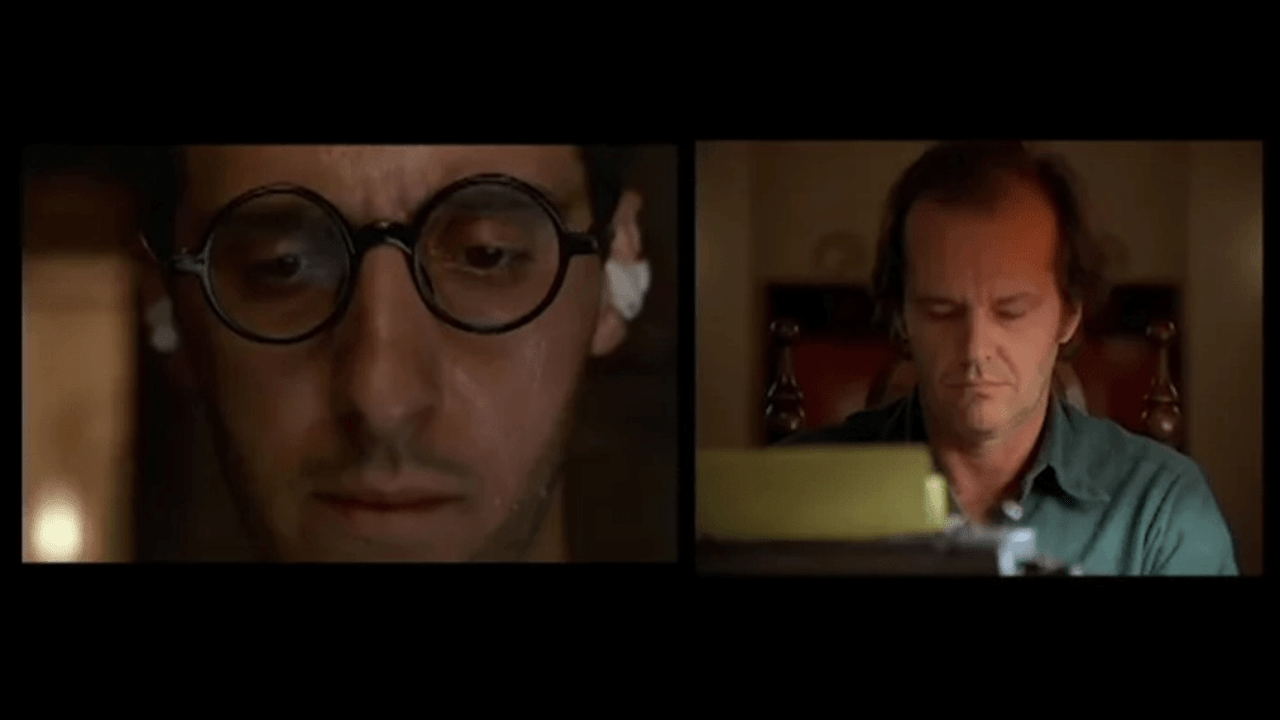
Though they are drastically different films, the Coen Brothers’ Barton Fink and Stanley Kubrick’s The Shining share more in common than you might think, especially when it comes to their depictions of haunted writers. And though these hauntings manifest in extremely different ways, they are both brought on by the same impetus: writer’s block.

In the following video essay, I’ve taken a look at the similarities and differences in the hauntings of Barton Fink and Jack Torrance to discover what each says about the link between the creative process and mental health.

Flawless Frames: THE LAST BLACK MAN IN SAN FRANCISCO

THE LAST BLACK MAN IN SAN FRANCISCO, the 2019 debut feature from writer/director Joe Talbot, is poetry on page and in celluloid, a collision of haunting beauty emanating from within the film’s characters as well as from the ephemeral environment – a place so casually familiar in our consciousness that what DP Adam Newport-Barra does to make it seem darkly whimsical and otherworldly is nothing short of astonishing. This frame, in particular, demonstrates a thoughtful amalgam of lighting, framing, contrast, composition, and unspoken emotion.

CinemaGrids: FIGHT CLUB/ A CLOCKWORK ORANGE

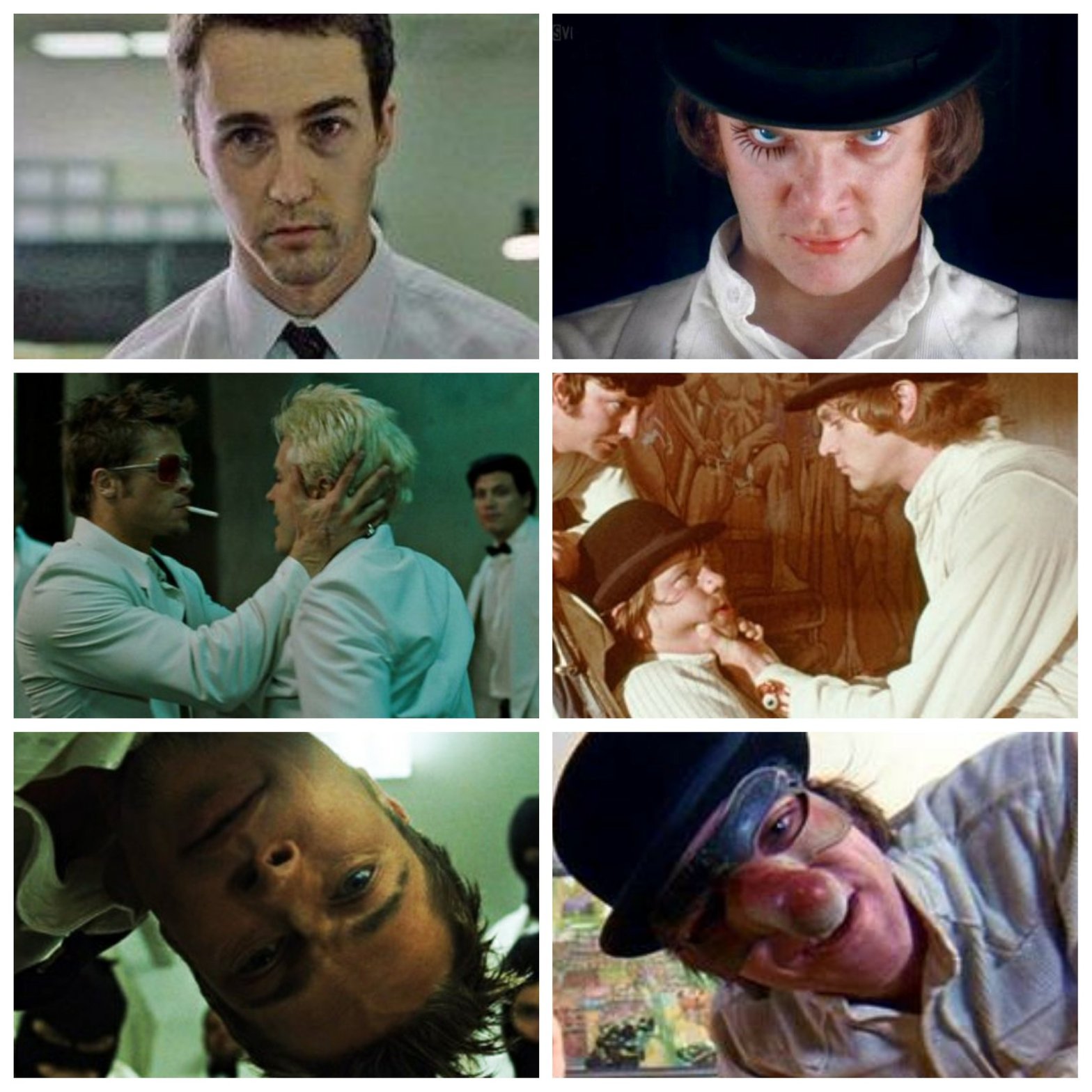
When David Fincher set out to adapt Chuck Palahniuk’s hyper-violent novel FIGHT CLUB, the first and only film that sprang to his mind was Stanley Kubrick’s absurd nod to ultra-toxic masculinity, A CLOCKWORK ORANGE, itself an adaptation of the novel by Anthony Burgess.

The result was a murky counterpart to Kubrick’s film; where CLOCKWORK was bright and overwashed with color, FIGHT CLUB has been run through a mud puddle, where it shines it also blinds, its shadows slither like characters themselves. As the following grid illustrates, not only did Fincher borrow color schemes and character dynamics, but in some instances actual composition meant to illustrate dominance, insanity, and the whisper-thin line between these things and ourselves.

Essay: Blood in the Water: The History of Shark Movies

Sharks are perfect movie villains: they’re ruthless, calculating, merciless, efficiently lethal, and look like total badasses, all sleek and cold and sharp. Sharks have no emotions, they rely on no rationale other than to fulfill three primal needs, as famously noted by Richard Dreyfuss’ Matt Hooper in JAWS: “swim and eat and make little sharks.” Sharks are the living embodiment of the food chain, a serious contender for deadliest apex predator in the game, and could be the absolute pinnacle of evolution: they have no natural predators, are one of the only species that don’t develop cancer, and no one really knows how long they can live, meaning it could be fucking forever.

Sharks are the closest thing you can get to a monster in real life, they’re almost supernatural in their ability to frighten, maim, and kill. For the love of god, they employ “exploratory bites.” You know what that means? Means if they don’t know what something is, they bite the shit out of it to find out. That’s kinda like me meeting you for the first time and stabbing you right off the bat. Except way worse. Ever seen SOUL SURFER? That girl lost an arm. Exploratory bite.

Bottom line? Sharks are scary as hell, which, again, qualifies them as perfect movie villains, and which is why their particular well has been revisited by filmmakers time and again starting in the 1960’s and continuing up to this very summer, where THE SHALLOWS has emerged as the sleeper hit of the season. In between there have been many strange and perhaps unnecessary stops that make for a fascinating evolution of the shark movie, one that I in my careful analysis have broken down into four basic eras: the JAWS era, the SEQUELS & IMITATORS era, the RESURGENCE era, and the BAT-SHIT CRAZY era.

In the interest of full disclosure, I feel I should mention I’m not just tracing the history of the shark movie, I’m also in a very, very small way a part of it. I’ve contributed to three shark movies you might have been duped into watching on the SyFy channel some Saturday night or another: I wrote the screenplays for 2-HEADED SHARK ATTACK and SHARK WEEK (a.k.a. SHARK ISLAND), and I have a story credit for MEGA SHARK VS MECHA SHARK. This is mentioned to assure you I have done ample research into the genre, too ample, if my friends, family and two out of three psychologists are to be believed. Every movie here mentioned I’ve seen at least three times – I know, I know – and the same goes for several unmentioned. Just so you know where I’m coming from.

THE JAWS ERA

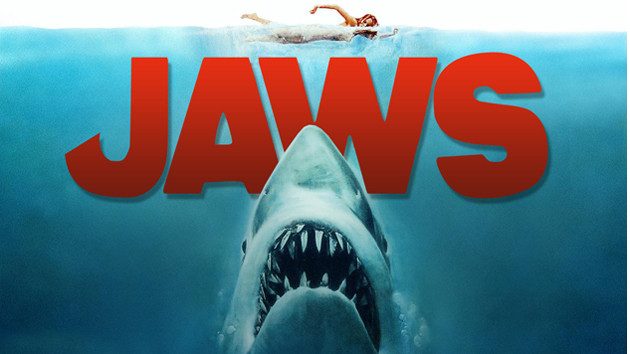
Let’s be perfectly clear about something before we go any further: JAWS is absolutely the best shark movie ever made. This is not up for discussion. Anyone who tries to tell you otherwise is either a liar or an idiot, and you shouldn’t be associating with either. JAWS single-handedly created the killer shark genre, like Kong did the monkey-amok genre, and like that hairy trailblazer, JAWS is King. But it wasn’t the first in the genre. That honor technically goes to Jerry Hopper’s THE SHARKFIGHTERS from 1956. It’s a story with echoes of the real life tale of the U.S.S. Indianapolis – itself the subject of two movies and the best monologue in JAWS – about a Navy project to find a shark repellant to protect shipwrecked sailors. The film, which stars Victor Mature (KISS OF DEATH), features a few surprisingly effective action scenes involving actual footage of tiger sharks, making this the first man vs shark film of note.

If there was a problem with THE SHARKFIGHTERS, it’s that it didn’t spawn any similar features. It would be 13 years before another shark-centric film hit theaters, and this one, called simply SHARK and starring Burt Reynolds, would be an utter and complete disaster from pretty much every standpoint. First off, it wasn’t really a shark feature as much as it was an action-thriller that featured sharks. Secondly, the director Sam Fuller, one of Hollywood’s best, quit the production after – get this – one of the stuntmen was killed by a white shark and the studio used his death to promote the picture; the final edit was done without Fuller’s involvement and when he saw the released cut he wanted his name taken off it but the studio refused. Thirdly, SHARK just isn’t good. It’s a terribly hackneyed story and Burt Reynolds seems to be confused as to what he’s doing there. But the shark footage is amazing and was truly dangerous to capture, so there’s something to be said for it. Needless to say, though, no one was chomping at the bit to make another killer shark picture after SHARK, nor was anyone too excited when six years later in 1975 a young director name Steven Spielberg set out to make not just a killer shark movie, but a giant killer shark movie. They were even less excited when production woes threatened to sink the picture, literally, at every turn. But when it was finally released, JAWS earned a kajillion dollars at the box office (adjusted for inflation), infected American culture like an incurable virus, solidified Spielberg as a major new filmmaking talent, and single-handedly invented the summer blockbuster, making it one of the top three most influential films of all-time, at least from an industry perspective, alongside STAR WARS and CITIZEN KANE. With JAWS came killer shark fever, and one film alone wasn’t going to cure that. Which brings us to the second era in the history of shark movies…

THE SEQUELS & IMITATORS ERA

The Last Shark, Great White

It would be three years until JAWS 2 hit theaters in 1978, but between the release of the original film and that, there was no shortage of fast, cheap, and out of control killer shark flicks to entertain the bloodthirsty masses. MAKO: THE JAWS OF DEATH – see what they did there? – was the first one out of the gate in 1976, followed closely by the TV movie SHARK KILL, then Mexican director Rene Cardona Jr. filled the remaining gap with a pair of his own features, TINTORERA: KILLER SHARK in 1977, and CYCLONE the next year. These films were the first to suffer from the same malady as most shark movies, excluding JAWS: they put the emphasis on the sharks, not the characters. As a result, these films are nothing more than kill-fests short on plot other than whatever exposition it takes to get their characters in the water. Audiences got a bit of a reprieve from this mindlessness when JAWS 2 finally opened, but after that it would be a long, long time before a shark flick of true quality came along.

In fact, though JAWS 2 was a financial success, the genre was all but exhausted by the knockoffs, and in the next decade besides JAWS 3(D) and JAWS THE REVENGE, there were only a few other big shark features made: THE LAST SHARK by original INGLORIOUS BASTARDS director Enzo G. Castellari, which came out in 1980 between JAWS 2 and 3, then Treat Williams in NIGHT OF THE SHARKS – which was more in a SHARK-vein than a JAWS-vein – and lastly MISSION OF THE SHARK, which is one of the films based on the U.S.S. Indianapolis (the other, U.S.S. INDIANAPOLIS: MEN OF COURAGE, starring Nic Cage, opens later this year.). These two latter films, both released after JAWS THE REVENGE definitively killed the franchise, signified a shift in the genre. The problem with shark movies is, as killers go there’s not a lot you can do with them. They have one weapon, one way to use it, and surprise is their go-to attack method. So after nearly a dozen movies in as many years, the well was dry. It didn’t help that during the same period the supernatural-slasher pic was born. With Jason Vorhees, Freddy Krueger and their ilk coming up with myriad inventive ways to kill scores of coeds each picture, who could expect audiences to still be entertained by the swift chomp of a great white? These latter films, then, represent the aimlessness of the shark genre after the tragedy of JAWS 4. The former, NIGHT OF THE SHARKS, tried to use sharks as exotic props in an adventure flick, while the later, MISSION OF THE SHARK, attempted to make them the villains an historical drama. Neither made much of a dent in the box office or the cultural consciousness other than as knells signifying the seeming death of a genre. But the shark film wasn’t dead, though for almost a decade there wouldn’t be a major feature made about the creature: it was only hibernating. And when the next wave of screenwriters managed to crack the shark-movie nut, they would do so in a way that would open the floodgates irrevocably.

THE RESURGENCE ERA

Deep BLue Sea

By this third era, which began around 1999, filmmakers had figured out there had to be more to a shark movie than “people go in the water, shark’s in the water, shark eats the people.” Those days were done and exhausted; no one wanted to see a regular old monster shark eating folks, it was passé. The dynamic had to change. So then the thinking went, if one shark was terrifying, two sharks or more would be terrifying to the Nth degree. And then what if all these sharks showed up places they weren’t normally supposed to be? Not to mention if said sharks were scientifically modified to be, say, faster, smarter, more lethal, or all of the above. For the next ten years shark movies would rise to their highest popularity through the use of these narrative templates on their own or in combination, but while the quantity went up, the quality, perhaps predictably, for the most part went down.

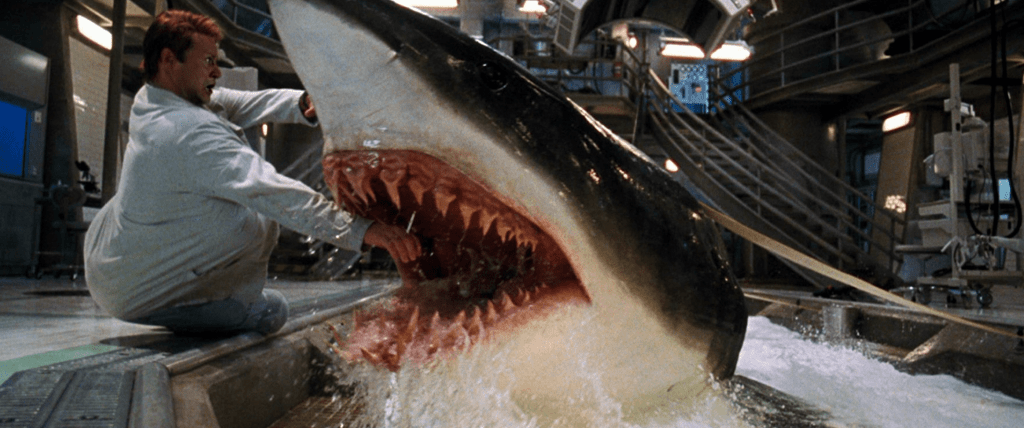
If there is a single film that spearheaded this resurgence and its particular take on marine biology, it would be Renny Harlin’s DEEP BLUE SEA, which is an exception of the era and a legitimate contender for second-best shark movie ever. In DEEP BLUE SEA, Alzheimer’s research leads to some genetic tinkering that creates supersharks who then bust out of captivity and stalk their captors. The result is akin to ALIEN in its ability to create suspense in a confined space, and its effect on the shark genre was to present a seemingly limitless range of possibilities for those willing to meddle with nature. As a result, you get movies like BLUE DEMON, DARK WATERS or HAMMERHEAD in which genetic alchemy has augmented the sharks into even more efficient killing machines. If that didn’t work for you, there were always “shark pack” movies like SHARK SWARM, SHARK ZONE, or RAGING SHARKS, where more sharks meant more opportunities for more gore. Then lastly there were the “sharks out of place” films like RED WATER (freshwater river), SPRING BREAK SHARK ATTACK (spring break) and SHARKS IN VENICE (Italy, not California), which took their unique terror from having sharks pop up where no sharks should be. This is all happening in the DVD and cable-TV era, when for the first time theatrical releases were no longer a filmmaker’s only avenue to an audience. Therefore most of these films were cheaply and swiftly made, but by placing their distinctiveness on scenario – who made the science and why, how did all these sharks come together, how did a shark get here – they weren’t just kill-fests anymore, though certainly the bar for murderous inventiveness never lowered. These scenarios dictated an attention to character shark movies hadn’t had since the early JAWS films, and though none of these films came close to living up to those, they did find a way to entertain besides jump scares and gallons of dyed corn syrup.

And entertain they did. Audiences ate these films up like, well, sharks. They loved the new sub-genres, to the point it felt like every week there was another film released. Furthermore, old sub-genres like the classic giant-killer-shark movie saw a resurgence in films like the SHARK ATTACK trilogy, MEGALODON, SHARK ATTACK IN THE MEDITERRANEAN and SHARK HUNTER, as did the true shark story in films like 12 DAYS OF TERROR, based on the 1916 shark attacks off New Jersey that were the inspiration for JAWS, and OPEN WATER, which is the second-best film of the era behind DEEP BLUE SEA.

OPEN WATER is the horrifyingly true story of a pair of scuba divers abandoned in the middle of the ocean by their boat and left to contend with the sharks who call that part of the ocean home. Needless to say, it doesn’t end well for anyone but the sharks, except maybe the audience, who made OPEN WATER one of the most successful independents of the decade and helped secure the shark movie’s place in our collective pantheon of nightmare fodder.

By the end of the first decade of the 21st century, on the backs of the Resurgence-era films, the shark movie was the most popular kind of creature feature in moviedom. So naturally, that’s when everything went bat-shit crazy.

THE BAT-SHIT CRAZY ERA

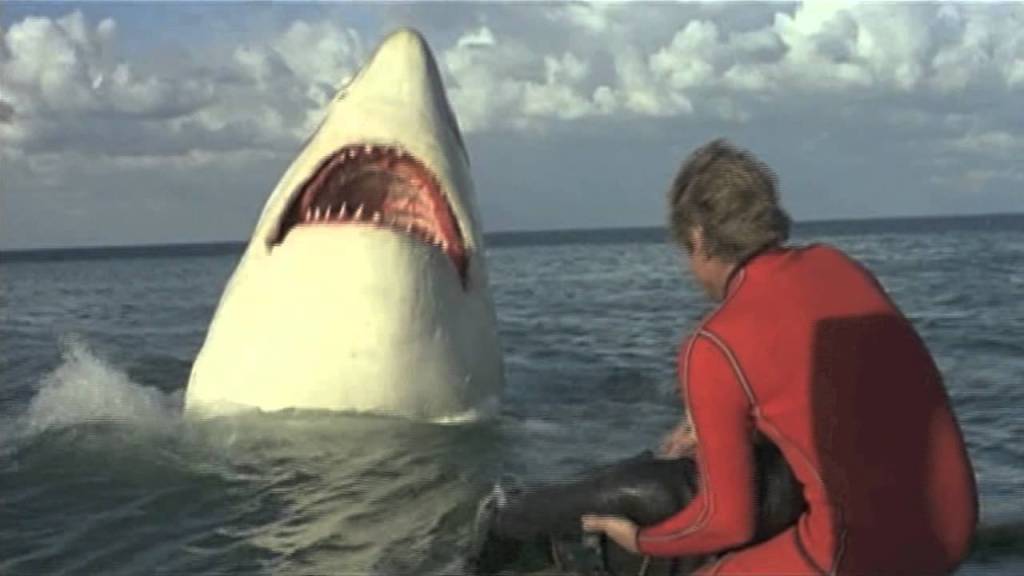
With the genre being beat to death at every turn, screenwriters – again, full disclosure, myself included – had to result to absurd perversions of science, nature, logic, taste, and sometimes even decency to come up with new ways to skin a shark. Or rather, have a shark skin you. So in 2010, a company called The Asylum, for whom I wrote and who with the SyFy channel is largely responsible for this most-recent, still-ongoing era, released MEGA SHARK VS GIANT OCTOPUS. On the surface it seemed like just another sea-based creature feature, but inside it was a hilarious display of over-the-top shark antics the likes of which had never been seen in the genre. In JAWS THE REVENGE, the shark pulls Michael Caine’s four-seater plane under the water, and it’s pretty ridiculous; in MEGA SHARK 1, the titular creature leaps from the depths of the ocean and climbs to the cruising altitude of a 747, then eats that 747, and it’s pretty fucking outstanding, as well as being super-ridiculous.

But it worked.

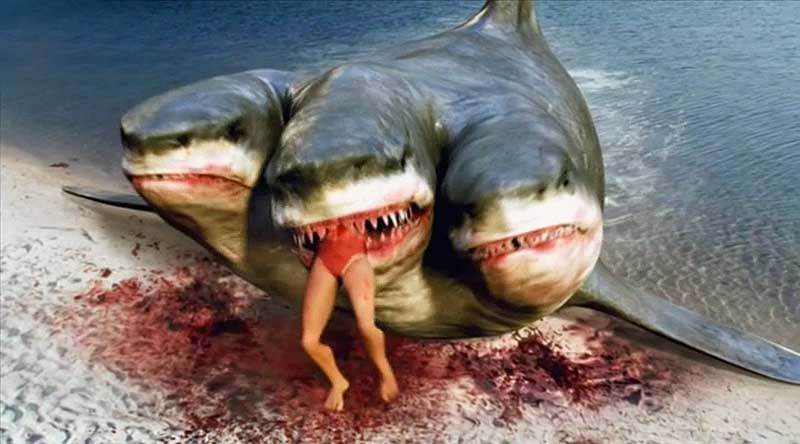
Producers began realizing that if you wanted to change the shark movie at this stage of the game, you had to change the shark itself. So you mate it with a prehistoric reptile (DINOSHARK), or another sea creature (SHARKTOPUS), or you give it two heads (2-HEADED SHARK ATTACK), or three (3-HEADED SHARK ATTACK), or you make its death irrelevant (GHOST SHARK), or give it the ability to travel on land (SAND SHARKS, SNOW SHARKS) or really anything else you could think of (SHARKNADO). With new sharks came new and exaggerated ways to kill, and very quickly the shark genre turned into a sort of one-upmanship of death, the way each new FINAL DESTINATION movie has to get a little more nuts than the last. In 2-HEADED, I wishboned a few people, took out a married couple at the same time, and even interrupted a menage a trois with a shark attack because it fell in line with the gimmick. As a writer, it was pretty liberating. I’ve killed at least 50 people by shark attack; it’s not easy to get inventive with your standard shark. But when the laws of science and nature went out the window, that all changed. However so did the timbre of the shark movie. For all the increased gore and hilarity, a lot of seriousness and real-world terror inherent to the genre was depleted, a lot, and shark movies started getting a reputation that was campier than frightening.

While there are big-studio, higher-quality, less-absurd films made during this era – DARK TIDE, SHARK NIGHT, THE REEF, BAIT, THE SHALLOWS – largely the present belongs to the absurdist shark movie, as perfectly represented by the SHARKNADO franchise, another Asylum creation, whose fourth installment – that is not a typo – drops this summer. Just the fact that there is a movie called SHARKNADO 4 is the most absurd thing to ever happen to cinema, let alone a genre.

I’d be a fool to try and predict where the shark genre goes from here. Likely it will just keep swimming along, going where the food directs it, following the chum of audience dollars into either legitimate or absurd waters, but one thing that seems certain beyond a shadow of a doubt is that like the creature it vilifies, the shark genre is a survivor. You can mythologize it, antagonize it, amp it up or dumb it down, but you can’t kill it, not really, that just puts more blood in the water.

CinemaGrids: Postures of SHAME

Steve McQueen’s SHAME is a complicated movie.

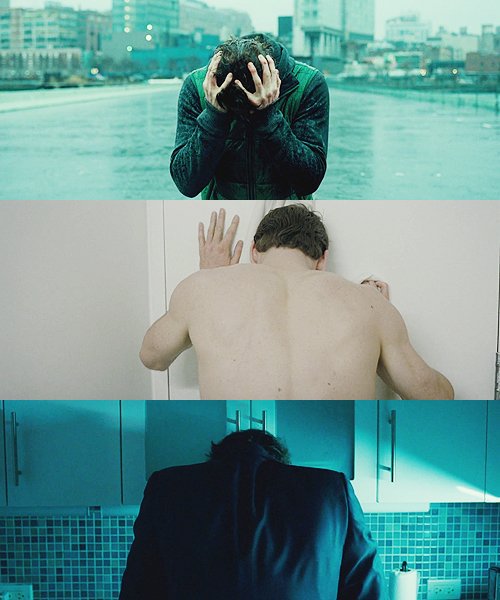
Not narratively, from that perspective it’s pretty straightforward: a man wrestles with his increasingly uncontrollable sexual addiction. But from a performance perspective, the task given actor Michael Fassbender was not an easy one – take this man whose perversions and callous use of other people define him, then redefine him as someone sympathetic. That is something that can’t be written or directed, it is a kind of anguish that can only be conveyed human to human, and nonverbally.

Fassbender’s expressions go a long way towards accomplishing this, but in my opinion it is the language of his entire body where Fassbender best conveys the abyss this character has cast himself into, this hole he desperately wants to climb out of but the lures of his darkness are too torturously tantalizing.

That makes him not a pervert but a prisoner, one not living for his desires but dying inside because of them.

And that is worth our sympathy.

Flawless Frames: WALKABOUT

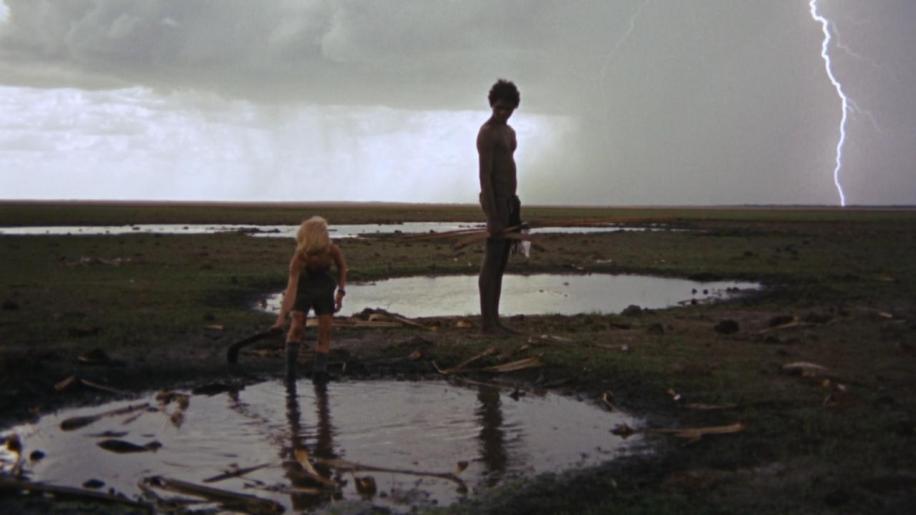
British director Nicolas Roeg didn’t direct a single film until he’d been in the industry a quarter-century, the first wave of his career being in cinematography. Roeg was a photographer turned DP who earned his chops as a 2nd unit cinematographer on the greatest film ever shot – LAWRENCE OF ARABIA – and himself shot most of DOCTOR ZHIVAGO before personal differences cost him the gig and the credit.

This, in part, propelled Roeg into the director’s chair, but he never left a cinematographer’s sensibility behind. For his second feature, WALKABOUT (1970), Roeg assumed both roles, director and cinematographer, and the result is an aesthetic precursor to THE REVENANT, a naturally-lit, landscape driven story of survival rendered larger than life by the simple act of holding a camera up to the natural world.

Essay: A Crisis of Chrysalis: The Runway Scene in THE NEON DEMON

originally publiushed June 30, 2017

THE NEON DEMON is Nicolas Winding Refn’s version of a fairy tale. It features a young pauper who’s really a princess – Jesse – it takes place in a magical kingdom – Los Angeles – and it comes complete with jealous stepsisters, spells, and dramatic transformations, but alas, no Prince Charming to save the day. This is a fairy tale in the old-school sense, one that seeks not to entertain but caution, one that takes a real evil inherent to our world and augments it into something allegorical.

At the film’s approximate mid-point, we’re treated to a fairy tale inside this fairy tale, a modern-day Cinderella moment where the shy, unwanted girl is instantly transformed into an icon of beauty, and also an object of covetous, ravenous desire. This moment is depicted in a four-and-a-half-minute runway scene that contains no dialogue, only haunting, tinkling tones and a barrage of imagery and color. It’s a scene I believe to be the film’s most pivotal moment in that it acts as an instant character chrysalis: Jesse enters this scene as a naïve caterpillar, barely aware of the scope of her potential, but she exits the scene a fully-formed butterfly, something beautiful and opulent and fragile in an intoxicating way. What happens in-between is how the change occurs.

First though, a little narrative refresher: after signing with a modeling agency, Jesse aces her first professional audition and lands a gig walking in a show for famed fashion designer Robert Sarno. On the day-of, as he’s preparing the models backstage, Sarno makes a gut decision to have Jesse walk to close the show. This is a very prestigious promotion, especially for a young model making her runway debut.

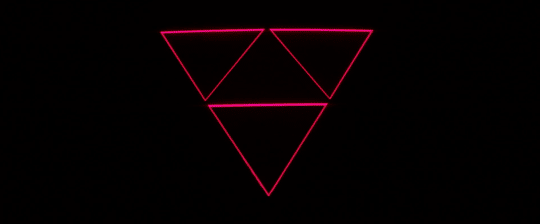
The show begins. Jesse’s all nerves at first as the other models drift out onto the runway. She closes her eyes to steady herself. This is where her chrysalis begins. When she opens her eyes again a moment later, the other models, the crowd, they’re gone, all she sees in front of her is an unfocused darkness occasionally lit by lens flare, presumably the flashing bulbs of the fashion press removed not by distance, but rather by a measure of consciousness. Then Jesse notices something flickering in the darkness. It’s the image of a point-down triangle made of three smaller triangles that she saw earlier as an hallucination after the Sarno casting call and a run-in with Sarah in the ladies room that ended in a tiny bit of blood-sucking on that other girl’s behalf. The triangle is a symbol of change, of transition; it is also representative of a doorway or a nexus point between places or, in this case, conditions of being.

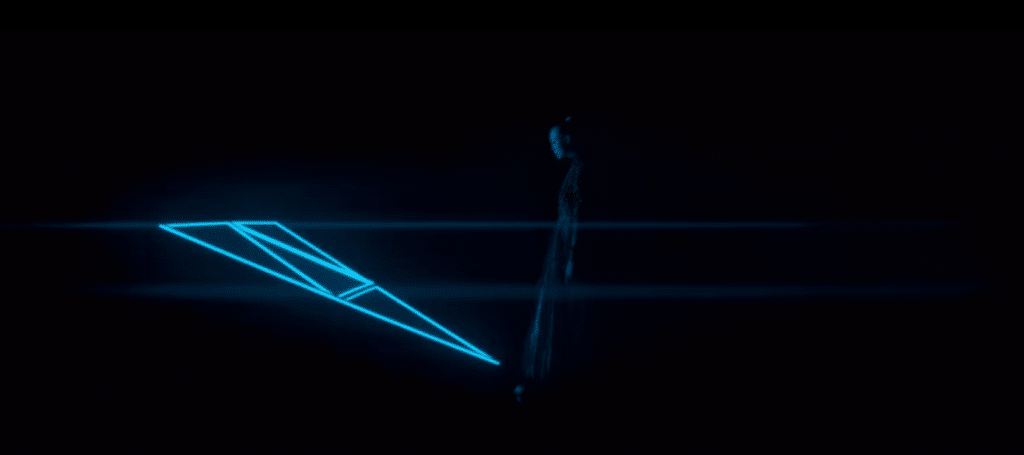
The scene at this point is colored cool and deep blue, soft, giving off a tranquil vibe. As Jesse hones her focus on the triangle image, this tranquility overtakes her. Secure in herself, she starts to walk, emerging from a doorway that itself is yet another triangle. As she nears the end of the runway, the triangle image occupies even more of her focus, it grows bigger, rises up to meet her, and fills the entire screen as well as Jesse’s perspective, causing her entranced expression to change to one of muted shock bordering on fear.

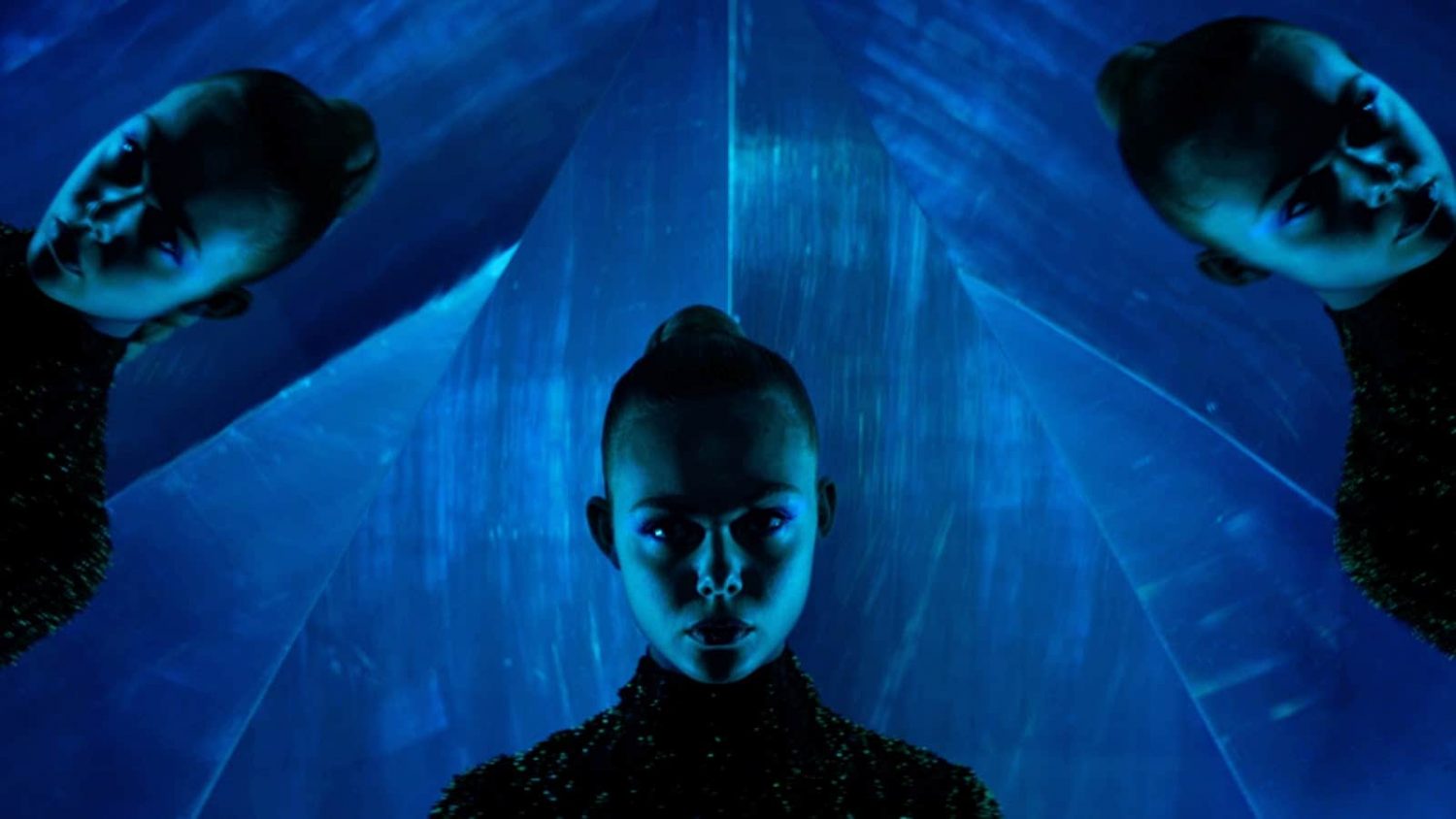
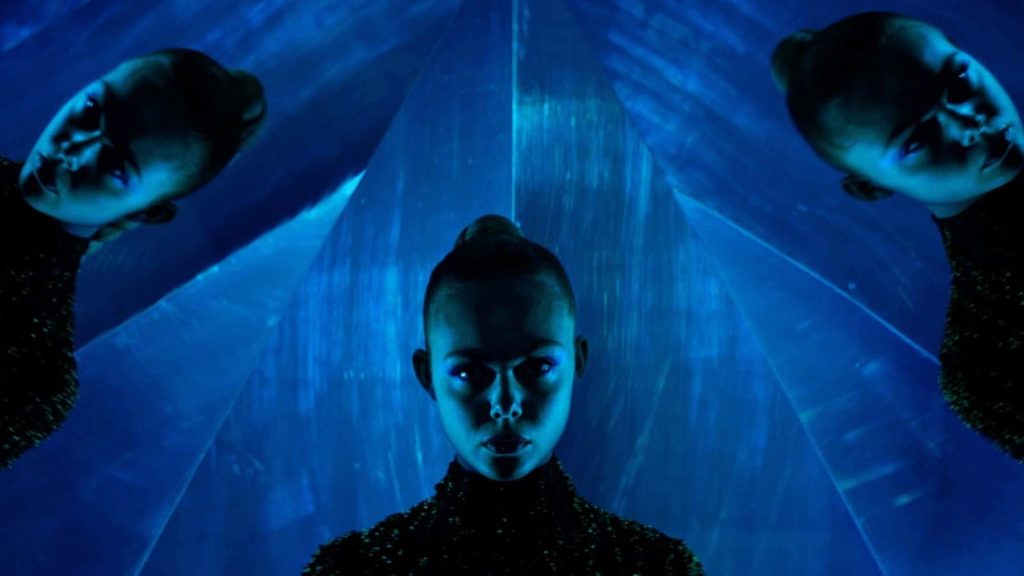
The next thing we see, Jesse is staring at herself, or rather three of her selves: another standalone version and its two reflections. All of this is occurring in Jesse’s mind, but fro conceptual purposes, I believe based on the angle of the reflections that Jesse is seeing this “new” self in the center triangle of the triangle image, the one that doesn’t actually have any sides but is formed of the negative space left open by the other three smaller triangles that form the larger image. But wherever this “new” Jesse is, it’s a prism-like structure where the configuration of her two reflections in the top half of the frame and her lone figure centered in the bottom half mimics a triangle positioned point-down.

As for this “new” Jesse herself, she’s no mere reflection, she is autonomous. From her narrow eyes and slim, stoic lips, she is also bold, sultry, and confident, almost frighteningly-so. “New” Jesse goes to kiss one of her reflections – the one on the right – and the “real” or “old” Jesse flutters her eyes closed. This is when the actual transformation within her chrysalis begins. We see “real” Jesse standing in front of the triangle image, hypnotized she seems, then the screen flutters to black.

A second later we’re with Jesse again, “real” Jesse, but she’s different. Most notably, she’s now cloaked in a murky red light instead of calming blue. It’s a predatory color, an exotic color, a dangerous color. Her expression matches this mood, and the slight, smooth way she’s moving her head is serpentine, like she’s sizing up prey. The “new” Jesse and her reflections in their prism are also cast in red, but a red interrupted regularly with flickers of blue. This is the transformation occurring. “Real” Jesse shown now in red, along with her altered disposition, indicates she’s ready to change, and the flickering light with “new” Jesse in the prism – blue representing old self, red representing new – indicates the personalities are switching.

Like an inverse Snow White or Aurora, “new” Jesse seals this spell with a kiss, first the reflection to her left (sinister) side, then to her right. “Real” Jesse watches like an aroused voyeur until both kisses are planted, and then it is done. Only one Jesse remains, still drenched in red, and she has assumed the boldness and confidence we saw in her other self, she has emerged from her trance as the stronger persona.

She backs away from the triangle image, now neon pink, and watches as it recedes into her subconscious. Then she turns and walks up the runway towards the triangular door, pink as well and reflected in the runway to resemble a shimmering diamond. As Jesse enters this diamond a swirling neon pink mist fills the frame, clouding our perception. Thus the spell is cast. The pauper is now a princess, the girl now an icon.

We see Jesse a beat later in the next scene as she’s coming through a gold curtain, parting it into a triangular opening, and everything about her – her eyes, her expression, her body language, her energy – is different, more mature, more suited for the cutthroat subculture of which she’s now a member. The change was real, and it continues.

In a most basic description, the runway scene is one side of Jesse meeting her other, more-realized self – the self she considers to be her best version – and then becoming her. It is such a total transformation that it almost plays like someone with Dissociative Identity Disorder (what used to be called “Multiple Personality Disorder”) seen from the inside as one persona willingly submits control to another. As this “new” self, Jesse is above all else more confident, which increases her already overwhelming allure. Unfortunately, this increased allure dooms Jesse by making her more of an object of desire to Ruby and more of a threat to Sarah and Gigi. Jesse was never going to survive this world, she was too beautiful for it, but the real tragedy of The Neon Demon – the real caution tucked inside this fairy tale – is that on the way to her inevitable demise, Jesse was seduced into thinking she could not only survive, she could rule, by a bolder version of herself who she was able to inhabit for a while but never permanently support.

Among other things, chrysalis a process of beautification, but in some cases that beautification is a weakening process, it comes with an increased fragility and a decreased lifespan. Nothing beautiful can last; that is, in part, what makes it beautiful, its rarity. What we need to recognize is that chrysalis doesn’t just change the thing cocooned, it changes the perceptions of all who see what emerges. Sometimes these changes are complementary, and sometimes they are not. In the case of The Neon Demon, the chrysalis might have changed Jesse for what she thinks is the better, but even more significantly, it changed those around her for the worse, it augmented their most primal tendencies as it augmented Jesse’s most beautiful. In wilds like these, though, beautiful things are devoured everyday. Humanity is cruel like that.

CinemaGrids: OLDBOY/KONG: SKULL ISLAND

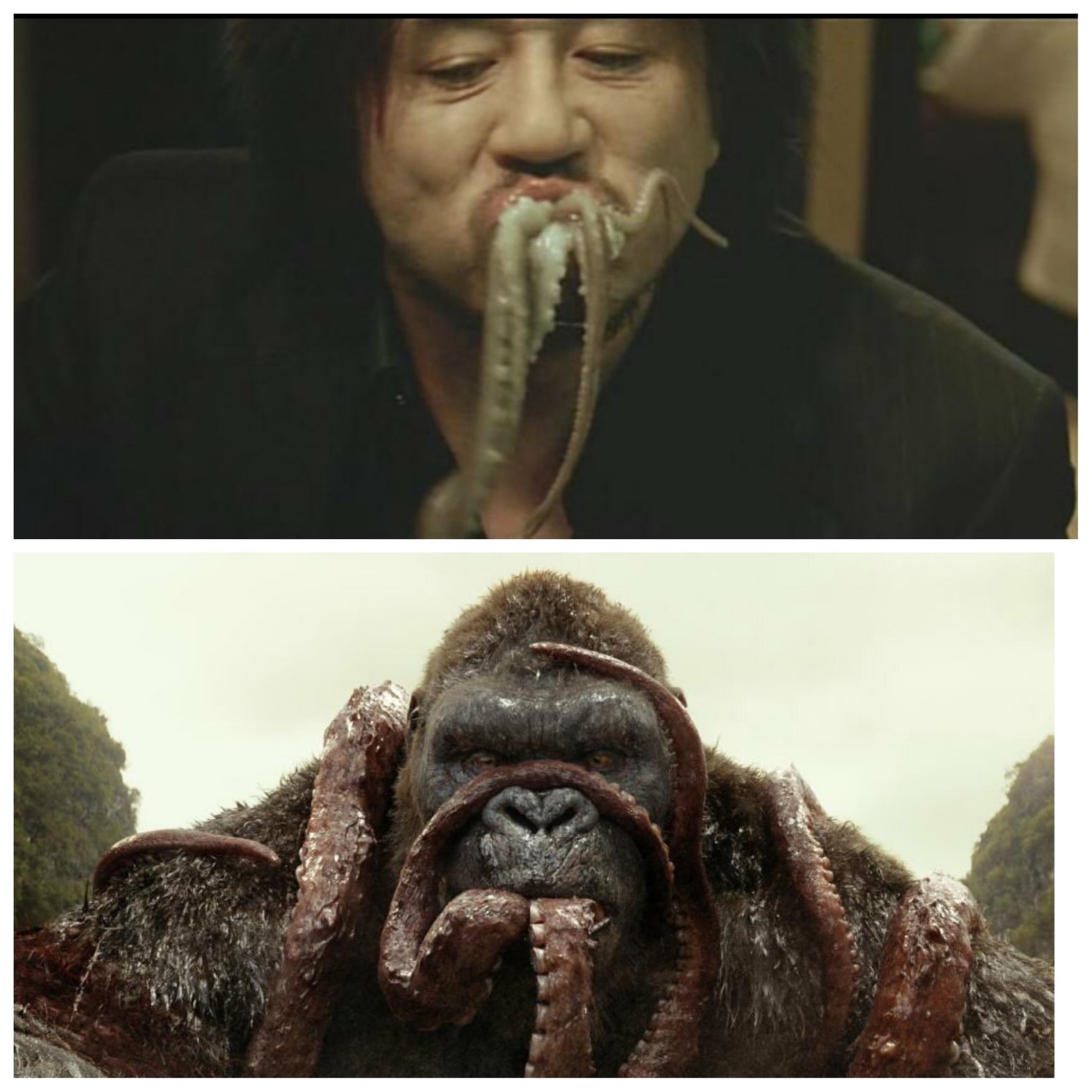
Director Jordan Vogt-Roberts’ 2017 film KONG: SKULL ISLAND is peppered with references to many of the greatest films of all-time, most of which depict the Vietnam War, during which Vogt-Roberts’ film is set. There are nods to PLATOON, THE DEER HUNTER, and APOCALYPSE NOW, but far and away the most ingenious reference is to Park Chan-wook’s OLDBOY (2013), in which the “hero,” ravenous after years of imprisonment, greedily slurps some octopus. When it came time for Kong to grab a snack from the sea, Vogt-Roberts’ paralleled this OLDBOY scene with hilarious (if gross) results.

Design a site like this with WordPress.com
Get started